Revealing our roots
People are drawn to the Collaborative by our mission and the values we practice. Our roots are in education whether community-based or in colleges and universities.
Many educators who catalyzed the Collaborative in its earlier years have taken on new projects, transitioned into new roles, moved to other organizations and other sectors.
We are grateful for the people who built the foundation for what we do today!
-
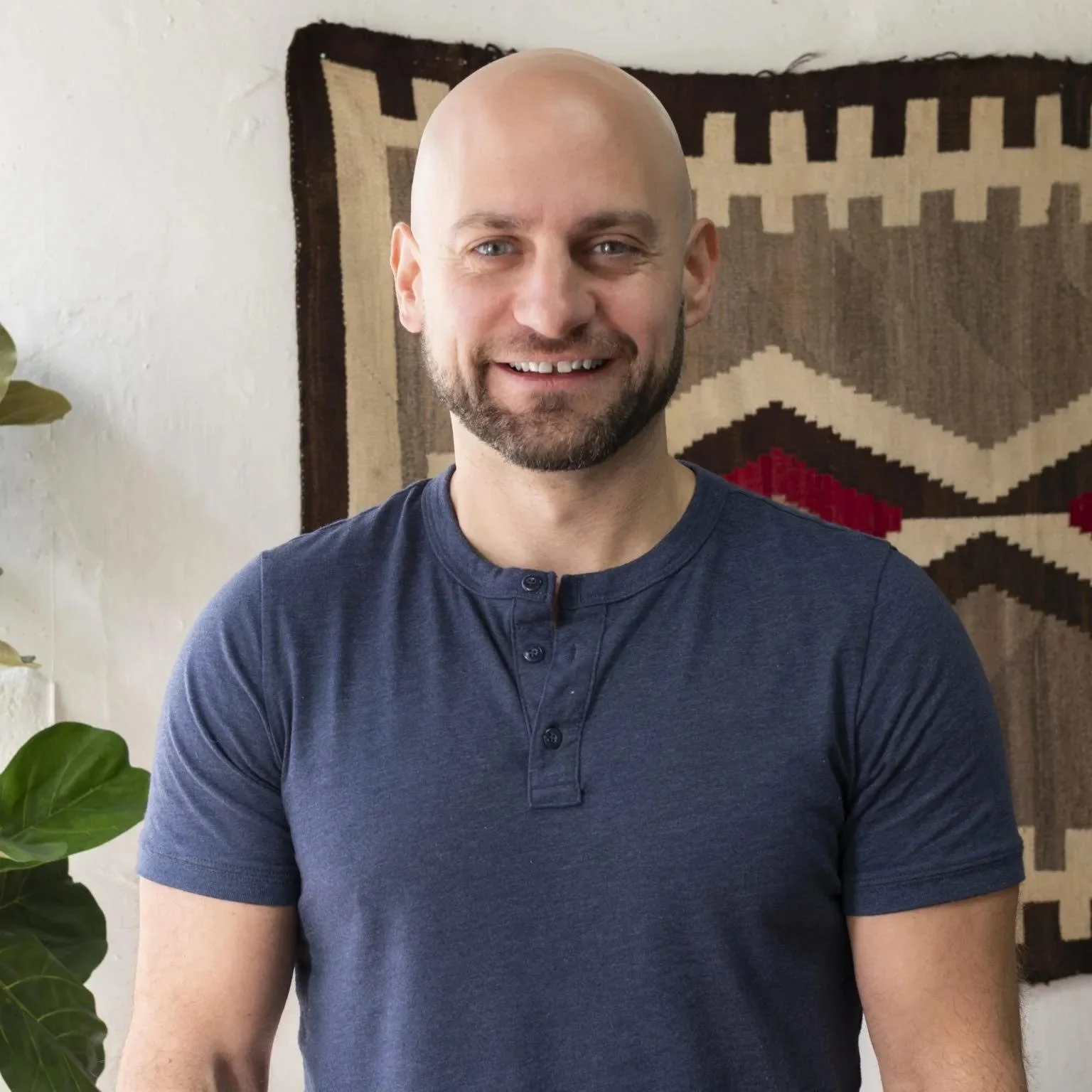
Brandon Blanche-Cohen
Brandon Blache-Cohen is the Executive Director of AllPeopleBeHappy (formerly Amizade). He has over 20 years of experience in the nonprofit, service-learning, and international development sectors. See our blog for the full conversation; here we edited for space
One of my favorite professional experiences was in Skaneateles, NY, where we held an Institute. We convened folks at an old nunnery – there were nuns all around. It was right on the lake, it was fall 2010 or 2011. It was just a great group of people. The weather changed a lot. It was this very unseasonably warm fall day, and then it snowed a bunch in the night. It was just a really, really cool experience. A lot of people who attended that are still in our network, still working with us in in different ways.
We had held Institutes, usually on a college campus. Kansas State was probably the biggest gathering I remember. There was Notre Dame also, we bounced around the country. That felt like our super bowl. That grew into globalsl.
I have great relationships, great friendships. It's not just talking about these issues and having activities around them. It's also about building a community of practice with people all over the country.
At the same time, all this was percolating Amizade and our community partners were ustrated with the sector, especially the study abroad side of what we do. For-profit companies could come in and talk about service learning or volunteerism but really it was just an exploitative practice to extract resources from communities and charge students money and make a profit from it.
We got really interested in the marketplace of what was going on specifically in study abroad and service learning. The image n the Collaborative webpage is an organization called Wamida that works on all sorts of women's economic development issues in a very rural, very impoverished community in northwestern Tanzania. It's not fine to do it there under the the guise of of community or international development. So we worked with our partners to create the concept of fair trade learning.
AllPeopleBeHappy works in communities in 22 countries. We don't typically work on university campuses. We have partnerships in each one of those countries, and they're not academic in nature. In the academic space the Collaborative would be our favorite people I go to The Forum, I went to NAFSA this year, and I wander around like roaming, looking for people. They're not there. They're with the Collaborative.
It feels as if there's a major seismic change happening in higher ed. This could be the moment, the opportunity for a new birth. I don't think higher ed is helping the world have a tomorrow that is not just worthwhile, but that makes the next day even better. So the Collaborative can put pressure. I think there's something there.
-
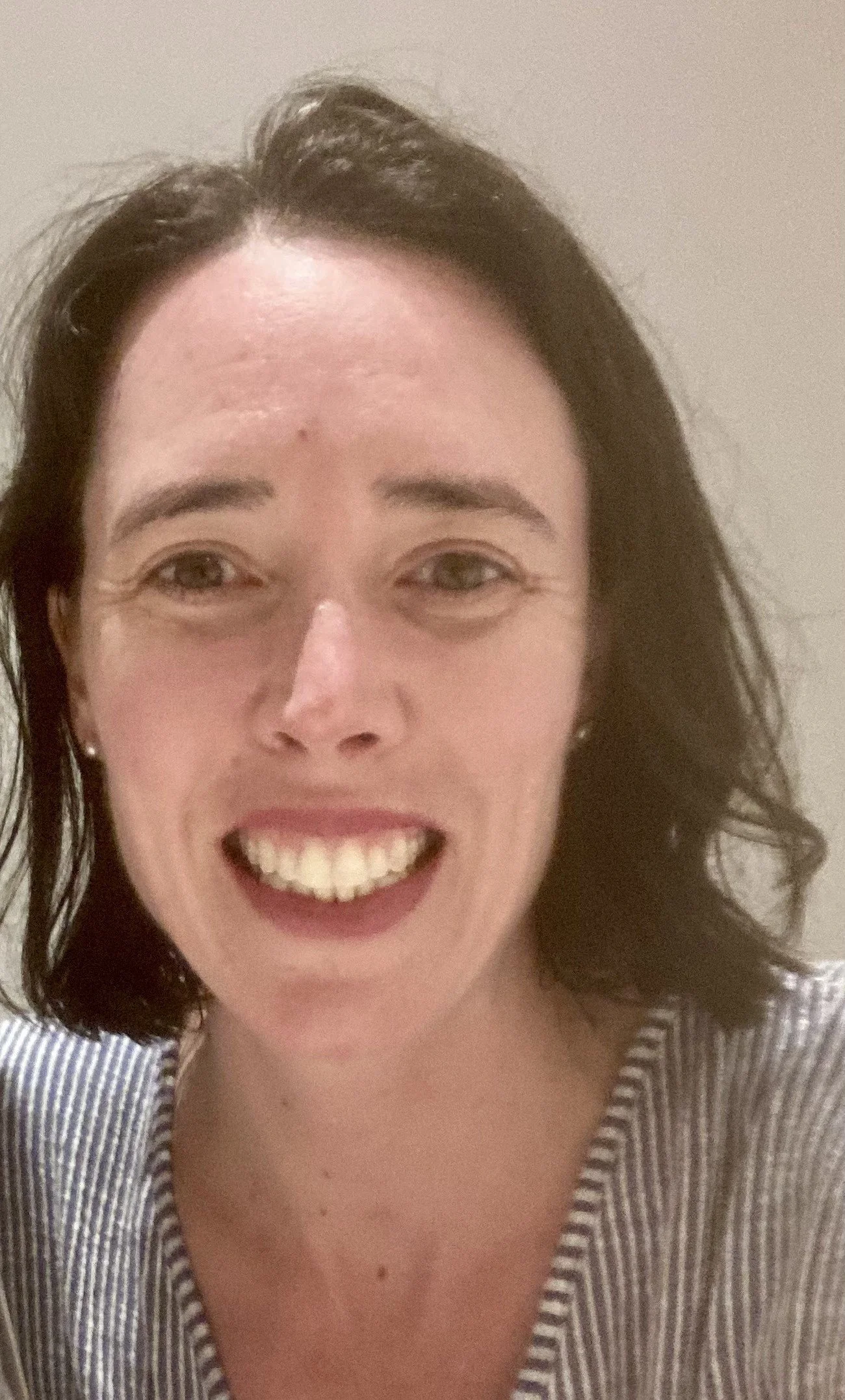
Caitlin Osorio Ferrarini
Caitlin Osorio Ferrarini recently joined Worcester Polytechnic Institute’s Global School as an Assistant Teaching Professor. Caitlin is a Ph.D. graduate of the University of Massachusetts Boston's College of Education. She has worked in the field of global experiential learning in Colombia and the United States as a field director, student advisor, professor, and researcher.
See our blog for the full conversation; here we edited for space
While I was in Colombia, Eric invited me to join the Collaborative’s steering committee. I became more involved – first in the community impact and fair trade learning side, and then with the student learning outcomes part and assessment. I then translated a portion of the GES (Global Engagement Survey) into Spanish with a Colombian professor, and I gave it to professors who were co-teaching English with our students. We led a co-teacher training, and I had them complete the GES pre-survey, with the idea that I was going to do the post survey at the end of the program. The government changed over and our program ended, and I never gave it to them. I sometimes forget that that happened!
Then I came to the US for a PhD in the College of Education at UMASS, Boston. There I began to work as Nora Reynolds’ research assistant with the GES, which was really a great introduction for me. I spent a lot of time with the qualitative data analysis and learned a lot from Nora about that, as well as data management, working with big data sets. That's how I came to start to work with the Collaborative. After serving as Nora’s research assistant I became the Collaborative’s director of assessment for global learning. That was exciting, because I got to dedicate my time and energy to the global engagement survey, which needed that time and attention.
One of the great things there was that we initiated the community of practice (CoP) group and sparked more engagement there. Nora began that group during the COVID pandemic, and then I structured it more based on Nora’s main recommendations. The CoP was my favorite part of working with the survey.
The survey is such an interesting tool to use, because, in a way, it's somewhat driven by participatory action ethos. The members who are using the survey give input – for example on updates to the demographic factors that we're interested in looking at. We discuss what are additional questions and modifications that we could make to the GES? It's really interesting to me that this group comes together to think about shared research questions in this global civic learning space. It was great to meet people from all of the different universities and programs and nonprofits, learning about the unique programming that they're doing. There is a lot of really unique and innovative programming going on among GES users.
-
Nora Pillard Reynolds
Nora Pillard Reynolds, PhD is former director of globalsl (the Collaborative). Nora co-founded Water for Waslala, an NGO that worked for access to water and sanitation in rural Nicaragua. She has taught community-based learning courses at Temple University, College Unbound, and Haverford College. In her research, she utilizes participatory methods to explore multiple perspectives in civic engagement and community campus partnerships. Nora earned her MA in International Development at La Univerisidad Complutense de Madrid in 2004, MS in Elementary Education from St. Joseph’s University in 2006, and PhD in Urban Education at Temple University in 2016.
See below for excerpts and our blog for the full conversation.
From Philly always
A lot of my work would get framed as international. But I'm very, very place-based in my approach.I'm from outside Philadelphia. My whole extended family is within a few hours of Philly. My roots are here, and I'm chuckling because I have worked very deeply in Philadelphia and very deeply – over 20 years – in this one municipality in Nicaragua.After I did grad school in Spain, I came back to Philly in 2004 and taught in North Philadelphia at Potter-Thomas Bilingual School through Teach for America and have been living in the city downtown ever since. When I applied to Teach for America, you had to preference which regions you would be willing to serve. First choice, second choice, third choice, I only put Philadelphia. And then I wrote, “I will not accept it if I am placed elsewhere.” I applied a long time ago. It's different now…
Meeting Eric
One day I was in my office reading papers and Novella came in. She said, “Oh, you need to come into my office and meet someone.” I said OK even though I wanted to get papers graded before class started. We've all been there! So I brought my little bag of carrots that I was eating for my lunch into the office to meet Eric.We did the “Hi!” and “Hi!” and “Should we meet for coffee?” If you've met Eric, there's no just, “Bye.” So we met for coffee two days later on campus. And he said, “You need to come to IARSLCE based on your interests. It's in three weeks in Chicago.” And I thought, “What are you talking about? I can't cancel my classes for the week – it's not built into the syllabus. What are you talking about?”
Well, he's persistent. I ended up canceling class and flying to Chicago to go to IARSLCE two weeks later. I walked in thinking I don't even know what this conference is other than a really long acronym.
Eric took me under his wing, started introducing me to everyone. That's when I met Richard [Kiely], and all these folks. He is a networker extraordinaire. Doing a PhD, you wonder, “I'm the only one thinking about these issues?” At IARSLCE, I felt that I had found my people…
From hanging out at conferences to working together
The idea was, first do the [Global Engagement Survey] GES with student outcomes. And, the following year, expand it to incorporate community outcomes. But people didn't want to pay for that, though they would pay for the student outcomes.At the time I was writing my dissertation and Eric asked if I could work 8 hours a week on the GES. Ben Lough and Eric, and I think Cynthia [Toms] at that point had come up with questions, pulling from different existing scales. I said, “Sure, I can do some data cleaning.” That was the start. They had come up with the initial set of questions for the survey and then I took it from there. The four of us were the research team, which felt like a team made in heaven. We all got along great, we all complimented each other with very different areas of experience and expertise…
-

Erin Sabato
Erin Sabato is Senior Director of Global Learning and Part-Time Faculty, Quinnipiac University. Since 2017 Erin has strengthened our network and shared work, and currently serves a member of our Advocacy Council. Here is her Collaborative origin story.
See below for an excerpt and our blogfor the full conversation.
I formally connected with the Collaborative in 2017, when Quinnipiac became an institutional member. I'd been at Quinnipiac at that point for about 8 or 9 years. Prior to that, I had been spending a lot of time reading, looking for articles and researching how to measure the impact of CBGL programs.
Prior to joining the Collaborative, my office had worked for several years with a for-profit, very business-oriented organization that offered an assessment tool designed to measure what they called global competency. We started with this tool because at that time, I thought, something is better than nothing; I was increasingly being asked to demonstrate the impact of our programs in a more structured way. I had been looking for something to show the growth in our students in a number of areas. But after a few years of working with this company, I knew it wasn't the right fit, it wasn't the right organization, and the tool wasn’t asking the right questions.
In late 2015, I attended a one-day workshop at Sacred Heart University, which is about 25 minutes from Quinnipiac. Eric Hartman was the featured speaker. I had to leave the event early, but before I left, he came out and handed me his card and I followed up with him soon after. I was so excited to learn about GlobalSL – the work they were doing and the tools they had developed. I was especially grateful for their commitment to open-source materials and started using them in my own work right away.